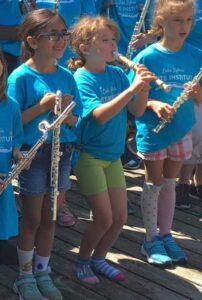
My teaching blends Suzuki methods/repertoire, classical conservatory methods/repertoire, and Celtic/folk styles/tunes. Lessons are adapted to fit each student’s goals and learning style/pace. I teach children as young as five, on up to very old adults! My aim is to help students find joy in music-making, as well as to build strong technical foundations that will carry them toward a lifetime of learning.
Below are notes on my philosophy and style of teaching. Please get in touch for details on times and fees.
What is the Suzuki Method? (Tricia is trained in Suzuki pedagogy, certified to Bk 4 in Flute and Bk 2 in Recorder.)
Developed by Dr. Shinichi Suzuki in the 1950s, Suzuki pedagogy has been adopted by music schools throughout the world. There are now thousands of Suzuki teachers and students who have embraced this joyful way to learn, because it’s fun, sociable, and embracing of the whole child’s self and learning. It is also very effective! Many professional musicians today started out learning their instruments the Suzuki way.
Yet, the ultimate goal of Suzuki is to help children develop character and skills that go beyond simply learning an instrument. The idea is to develop a kind heart and a lively mind, attributes that provide benefits throughout life.
Suzuki embraces the following ideas and elements:
- Every child can learn to play music, just as they learned to speak (the “mother tongue method”).
- Playing “by ear” is natural and easy when it comes before note-reading, just as speaking precedes reading.
- Learning an instrument early (age 4-5+) offers distinct advantages, yet our brains possess remarkable “plasticity” into old age. Learning later in life can be very rewarding.
- Parents and caregivers play a vital part in their child’s musical learning, attending lessons and practicing with their child at home between lessons. (And parents may choose to learn too. Modelling is a profound kind of teaching.)
- Daily listening and practicing of thoughtfully sequenced repertoire are key to developing talent.
- Games, laughter, and group classes/events play a big role in motivating your child to continue learning

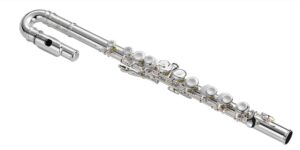
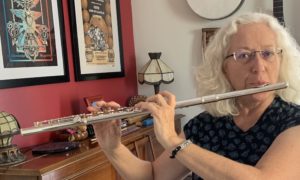
What is a classical conservatory style of learning? (Tricia graduated from the Royal Conservatory of Music in Toronto with her ARCT in flute performance.)
The Royal Conservatory of Music provides a recognized national standard of musical success through a sequenced course of study (repertoire books and CDs) from beginner to advanced levels. Repertoire includes a broad selection of pieces representing a variety of styles and periods. Technique (scales, chords, arpeggios, patterns, and études) is designed to support the demands of the repertoire for that level. Musicianship is cultivated through the development of both reading and aural skills that encourage independent creative musical explorations. Students may also choose to take Conservatory Exams (held across the country) that allow them to track and celebrate their progress.
What is meant by Celtic/folk styles/tunes?
Celtic music is often narrowly referred to as “Irish” music, but it’s really a term that covers folk tunes from Celtic people who lived all over the UK and NW Europe. At Nova Scotia Celtic sessions, where musicians come to play tunes together (often in pubs), the repertoire naturally leans toward Scottish tunes.
Celtic music comes in the form of jigs, reels, hornpipes, marches, airs, polkas, strathspeys, waltzes, etc., tunes that have now traveled all over the world and are experiencing a glorious renaissance in pubs and community spaces everywhere. Though tons of Celtic tunes have been written down, it is traditionally orally transmitted music. Recordings offer a range of interpretations of tunes, and often are reinvented in mashups with other styles.
As a teacher, I can start children or adults off with a solid foundation in playing Celtic flute or whistle. However, if you are an advanced player in Nova Scotia, you may want to check with Jennifer Publicover or Amy O’Neill for Celtic flute lessons.